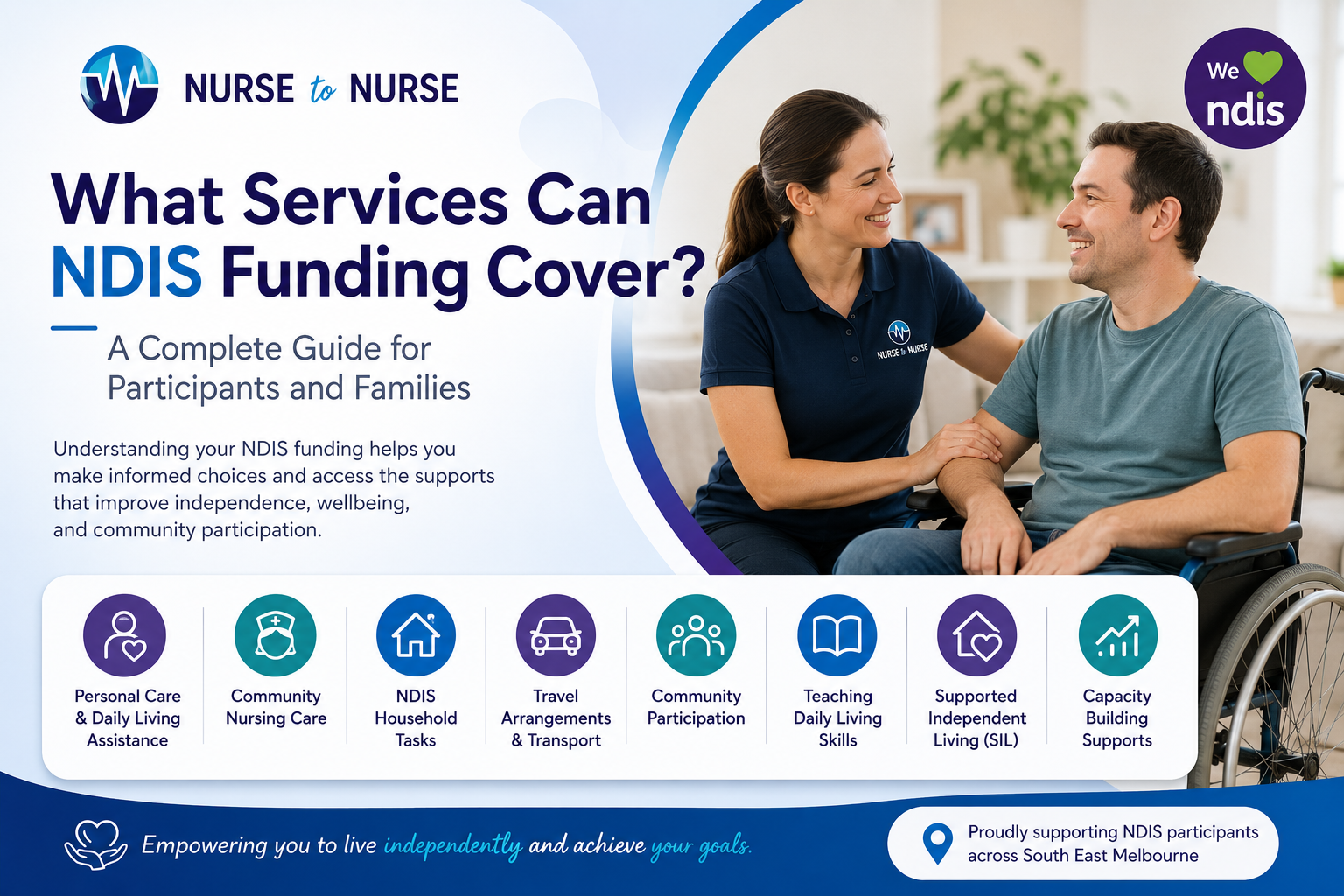
Navigating the National Disability Insurance Scheme (NDIS) can sometimes feel overwhelming, especially when trying to understand exactly what supports and services your funding can cover. Whether you are new to the NDIS or reviewing your current plan, knowing what assistance is available can help you make informed decisions and maximize the benefits of your funding.
At Nurse to Nurse, we understand that every participant has unique goals, needs, and aspirations. As a trusted disability support and community nursing provider in South East Melbourne, we are committed to helping participants access high-quality, person-centred care that promotes independence, wellbeing, and community participation.
In this guide, we’ll explore the types of services NDIS funding may cover and how Nurse to Nurse can support you throughout your NDIS journey.
Understanding NDIS Funding Categories
NDIS funding is generally divided into three main support budgets:
1. Core Supports
Core Supports help participants with everyday activities and disability-related needs. This funding is often the most flexible and can be used for a variety of essential supports.
2. Capacity Building Supports
These supports help participants develop skills, increase independence, and work towards achieving long-term goals.
3. Capital Supports
Capital Supports cover investments such as assistive technology, home modifications, and specialist disability accommodation.
The specific supports available to you will depend on your individual NDIS plan and approved goals.
Daily Personal Care and Assistance
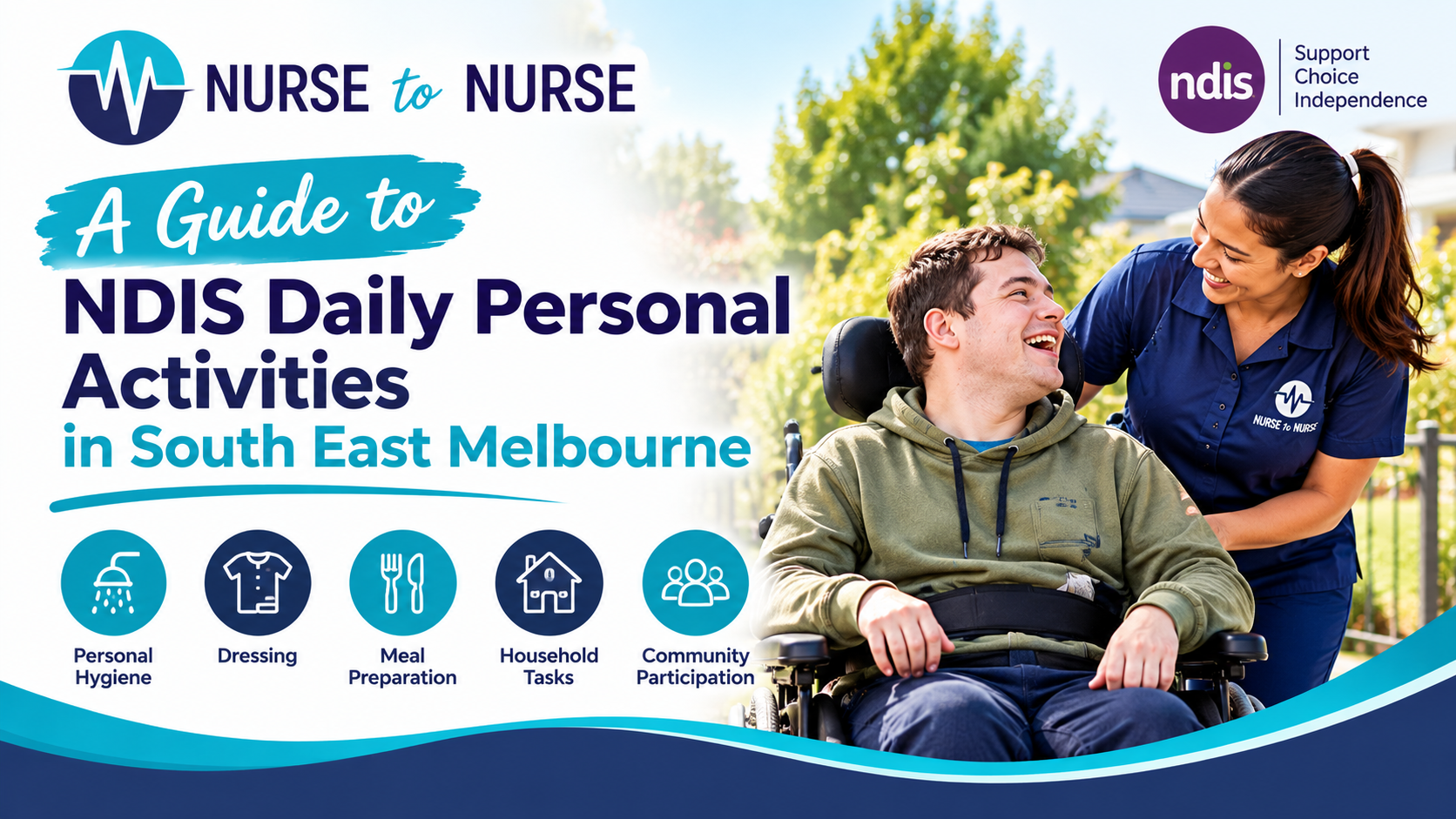
One of the most commonly funded NDIS services is assistance with daily personal activities.
Many participants require support with tasks such as:
- Personal hygiene and grooming
- Showering and bathing
- Dressing and undressing
- Mobility assistance
- Medication reminders
- Mealtime support
At Nurse to Nurse, our compassionate support workers provide respectful and individualized personal care services that help participants maintain dignity, comfort, and independence in their daily lives.
Community Nursing Care
For participants with complex health needs, the NDIS may fund Community Nursing Care when it relates to a participant’s disability and supports their independence.
Community nursing services may include:
- Medication administration
- Wound management
- Continence assessments
- Chronic disease support
- Health monitoring
- Clinical care planning
- Nursing assessments
At Nurse to Nurse, our qualified nursing professionals deliver high-quality Community Nursing Care in the comfort of your home, ensuring participants receive professional healthcare support while maintaining their quality of life.
NDIS Household Tasks
Maintaining a clean and safe home environment is essential for wellbeing. The NDIS may fund support with household activities when participants are unable to complete these tasks independently due to their disability.
Funded household supports may include:
- Cleaning and tidying
- Laundry assistance
- Dishwashing
- Changing bed linen
- Meal preparation
- Grocery shopping support
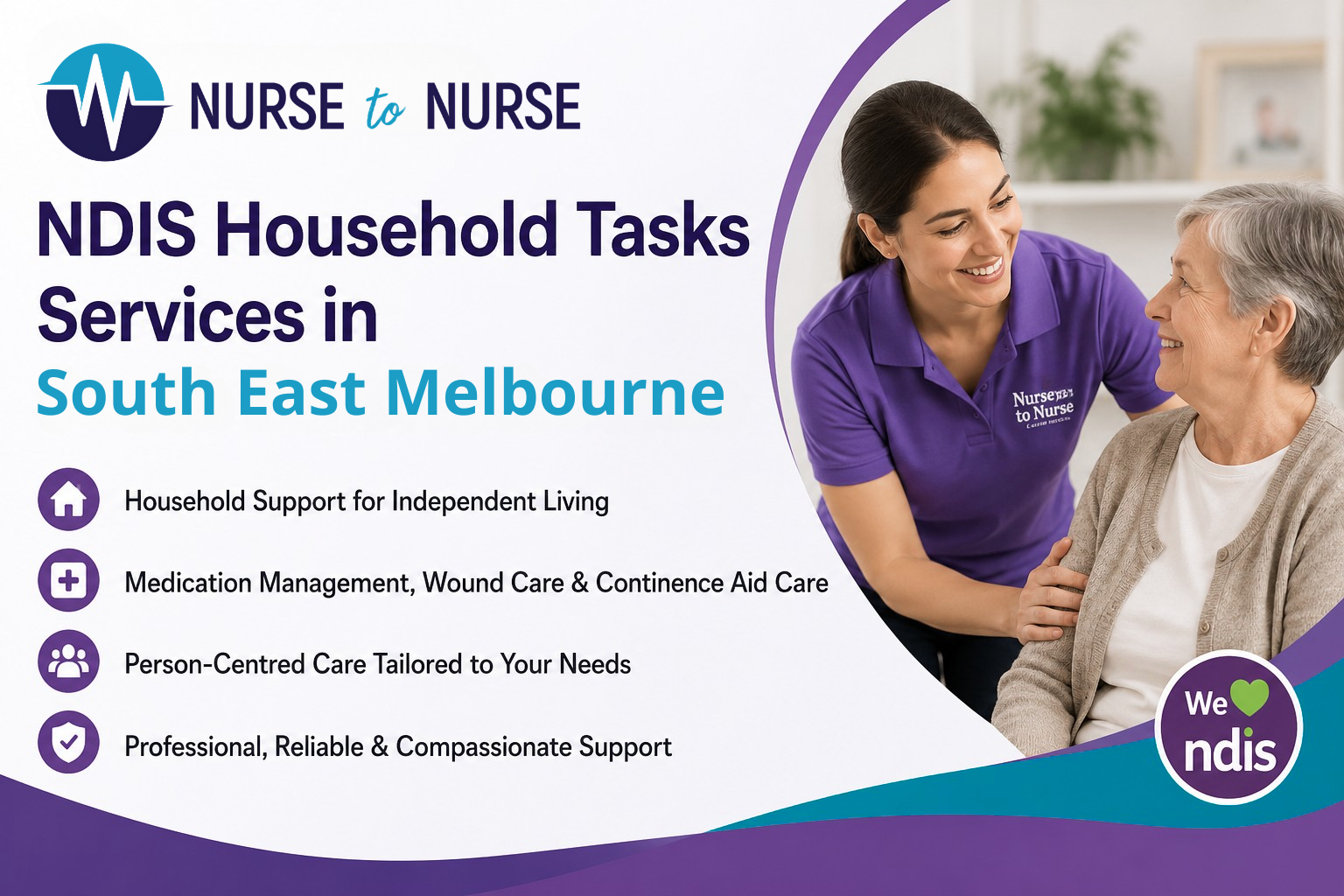
Our team at Nurse to Nurse provides practical assistance with NDIS Household Tasks, helping participants enjoy a comfortable and well-maintained home while focusing on their personal goals.
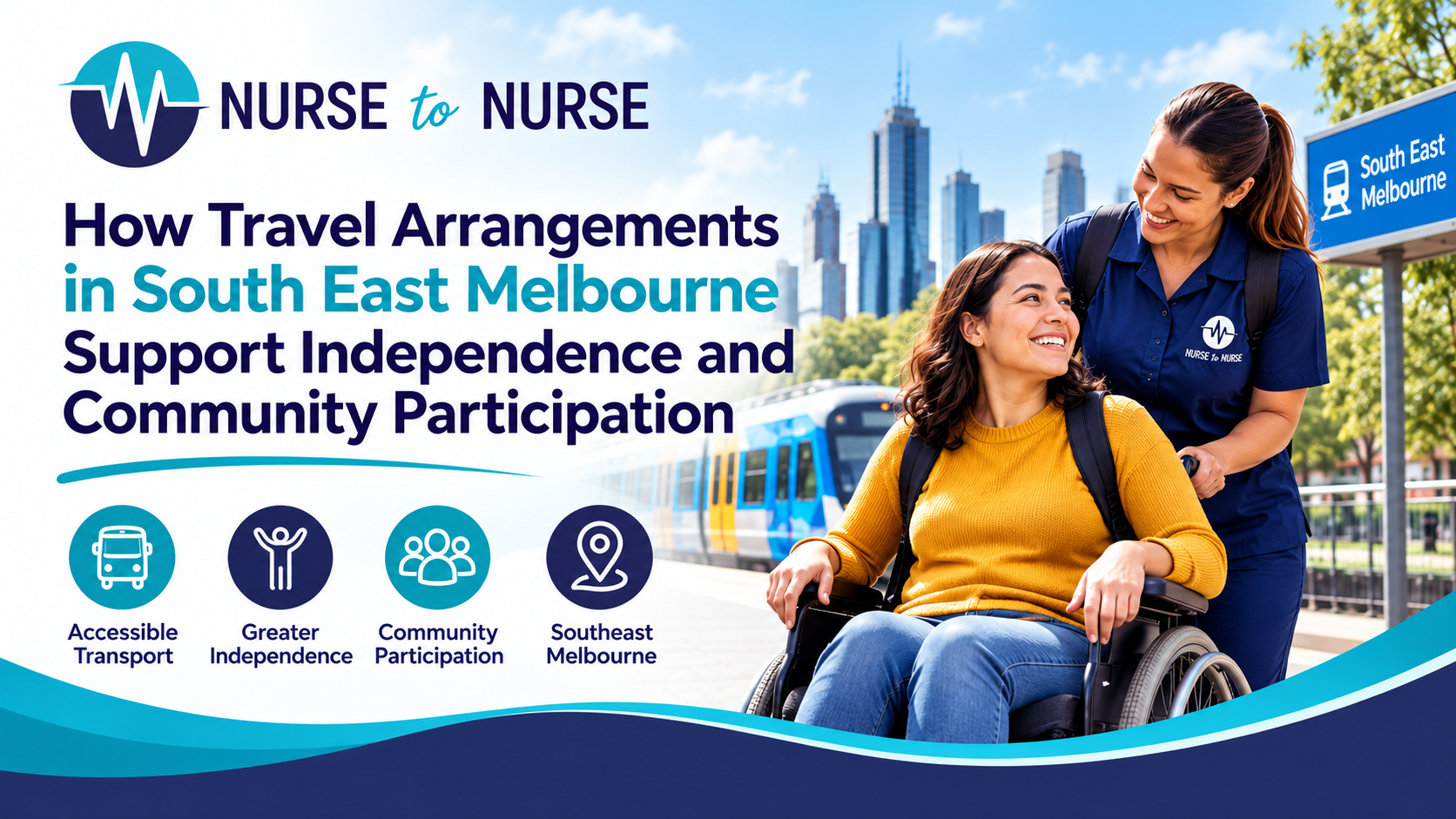
Travel Arrangements and Transport Support
Accessing the community is an important part of living an independent and fulfilling life. Depending on your circumstances, NDIS funding may assist with travel arrangements and transport-related supports.
This may include:
- Transport to medical appointments
- Travel to community activities
- Educational and training programs
- Employment-related travel
- Shopping trips
- Social outings
At Nurse to Nurse, we support participants with safe and reliable travel arrangements, enabling them to stay connected to their communities and participate in activities that matter most to them.
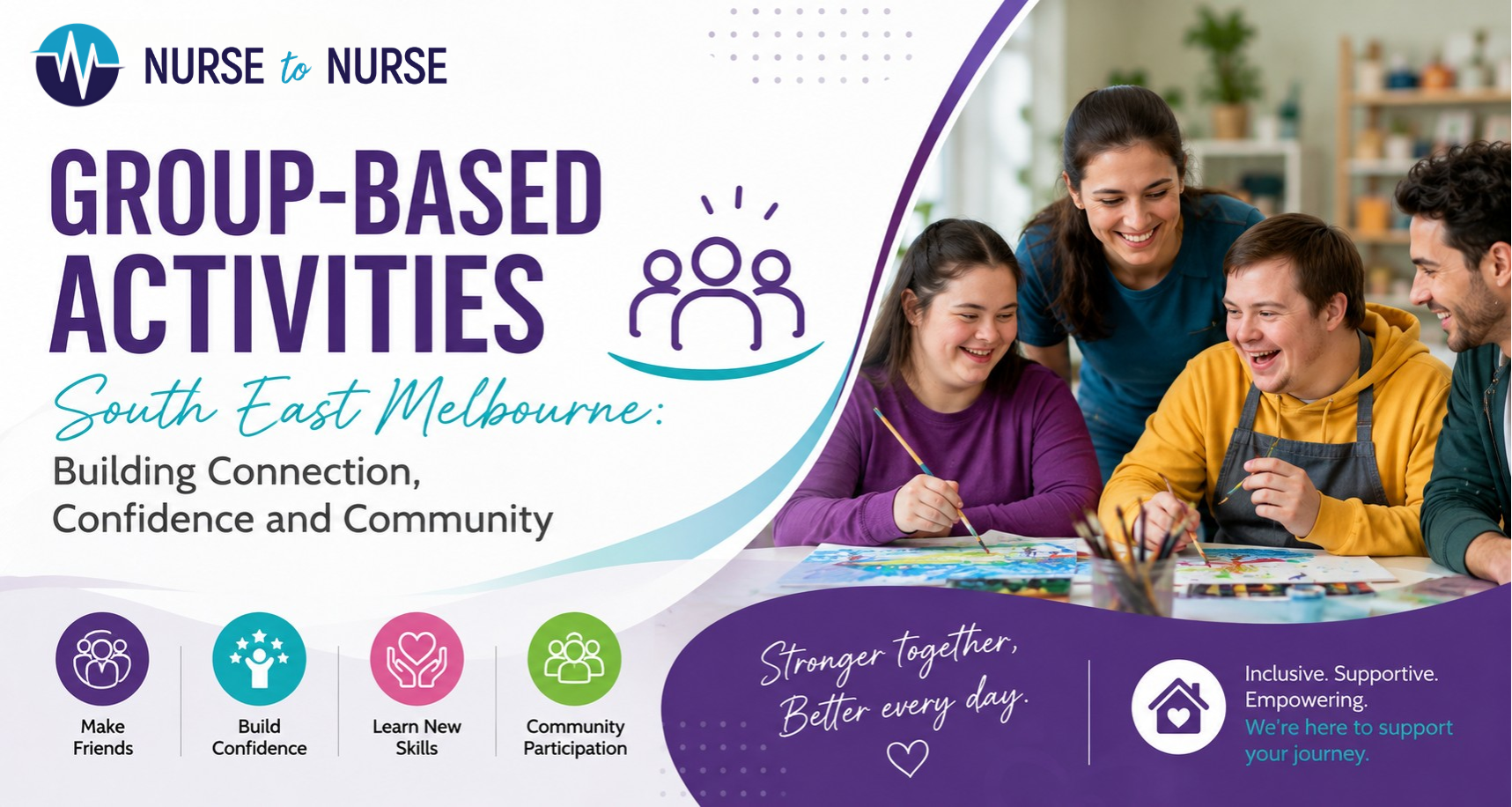
Community Participation and Social Inclusion
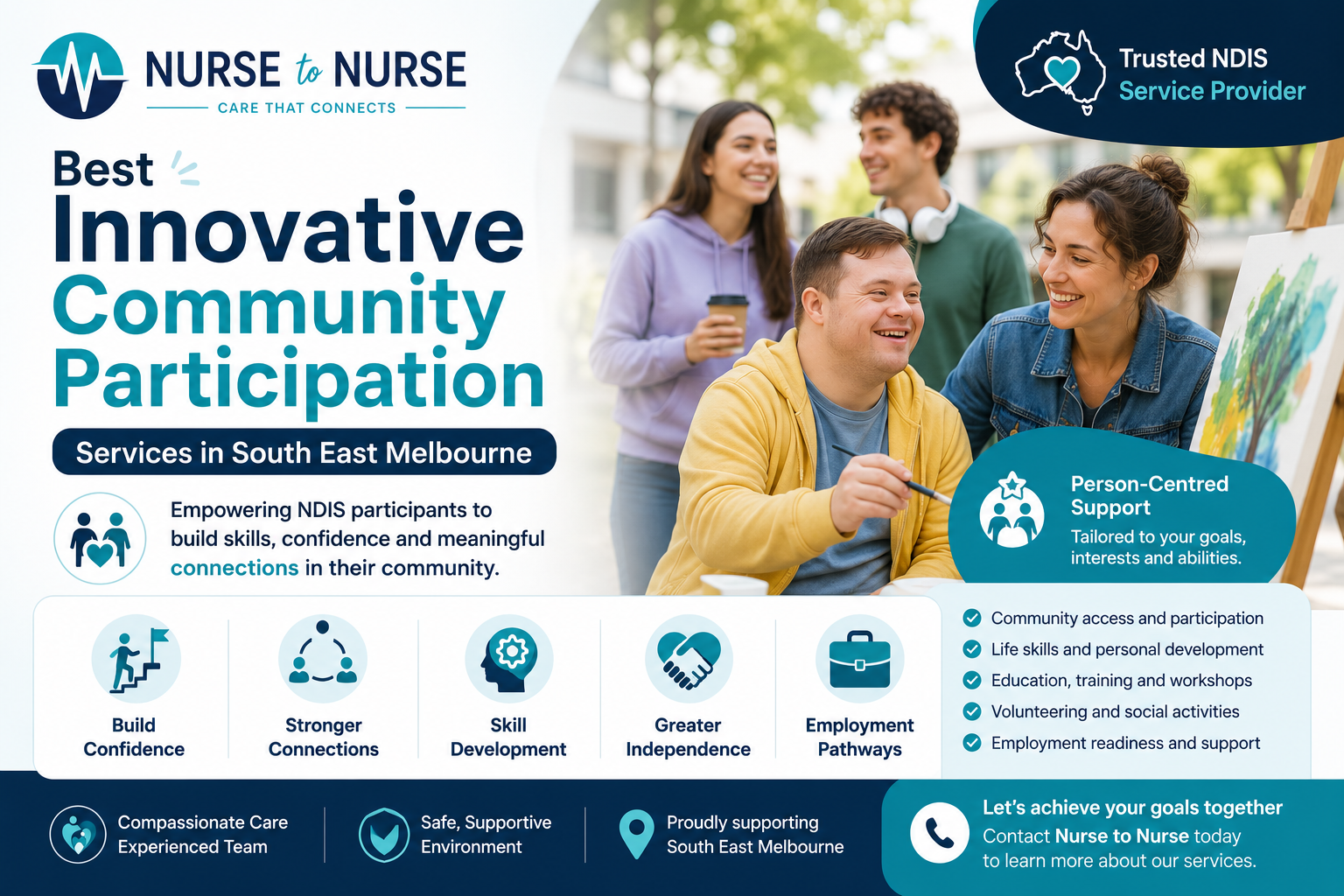
Many participants use NDIS funding to engage in social and recreational activities that improve confidence, wellbeing, and community connection.
Community participation supports may include:
- Attending social events
- Joining local groups and clubs
- Recreational activities
- Volunteering opportunities
- Community programs
- Building social skills
The Nurse to Nurse team encourages meaningful community involvement and helps participants develop confidence while building valuable social connections.
Teaching Daily Living Skills
The NDIS places strong emphasis on helping participants build independence. Through Capacity Building Supports, funding may be available for teaching daily living skills that help participants manage everyday tasks more confidently.
These skills may include:
- Cooking and meal preparation
- Budgeting and money management
- Personal care routines
- Shopping independently
- Household management
- Time management
- Communication skills
- Public transport training
At Nurse to Nurse, we focus on empowering participants through practical learning experiences that support long-term independence and self-confidence.
Supported Independent Living (SIL)
Participants who require ongoing support at home may be eligible for Supported Independent Living (SIL).
SIL services may include:
- Daily personal support
- Assistance with household tasks
- Skill development
- Overnight support
- Community participation
The goal of SIL is to help participants live as independently as possible while receiving the support they need in a safe and supportive environment.
Capacity Building Supports
NDIS funding may also help participants build skills and improve independence in various areas of life.
Examples include:
- Employment support
- Education and training
- Improved health and wellbeing
- Increased social participation
- Relationship-building skills
- Improved communication
These supports are designed to help participants achieve meaningful personal goals and create greater opportunities for the future.
Assistive Technology and Equipment
In some cases, NDIS funding may cover assistive technology that helps participants perform daily activities more independently.
Examples include:
- Mobility equipment
- Communication devices
- Personal care equipment
- Home safety devices
- Adaptive technology
These supports can significantly improve accessibility, independence, and quality of life.
How Nurse to Nurse Supports Your NDIS Journey
At Nurse to Nurse, we are passionate about delivering high-quality, person-centred disability support services throughout South East Melbourne. Our experienced team works closely with participants, families, and carers to create individualized support plans that align with personal goals and NDIS funding.
Our services include:
- Community Nursing Care
- Personal Care and Daily Living Assistance
- NDIS Household Tasks
- Travel Arrangements and Transport Support
- Teaching Daily Living Skills
- Community Participation
- Supported Independent Living (SIL)
- Capacity Building Supports
We believe every individual deserves the opportunity to live with dignity, independence, and confidence, and we are committed to providing the support needed to achieve those goals.
Final Thoughts
NDIS funding can cover a wide range of services designed to improve independence, wellbeing, and community participation. Understanding your available support allows you to make the most of your NDIS plan and access services that genuinely enhance your quality of life.
Whether you need Community Nursing Care, assistance with NDIS Household Tasks, support with travel arrangements, or help with teaching daily living skills, Nurse to Nurse is here to support you every step of the way.